
What Medicare Really Covers for GLP-1 Drugs in 2026

September 23, 2026

A Plain-English Guide to the New $50 Copay Program and How to Get Started


For years, Medicare generally has not covered medications when they are prescribed solely for weight loss. Federal law currently excludes drugs used for weight loss from the standard Part D benefit. However, a new, limited exception to the rule became available on July 1, 2026.


Through a temporary program called the Medicare GLP-1 Bridge program, certain people with Medicare drug coverage may now be able to get select GLP-1 medications intended for weight management for a $50 copay per one-month supply. The Bridge program does not eliminate the underlying Part D exclusion for weight-loss drugs. Instead, it provides a separate, temporary pathway for eligible Medicare beneficiaries.


Read on to learn what the program covers, who could qualify, and how the process works.


Medicare Part D’s Existing GLP-1 Coverage


Before looking at the new Bridge program, it helps to understand GLP-1 coverage up to this point.


Medicare Part D can cover certain GLP-1 medications when they are prescribed for a medically accepted condition other than weight loss. Depending on the particular drug, those conditions may include:


  • Type 2 diabetes
  • Certain cardiovascular risks
  • Moderate-to-severe obstructive sleep apnea
  • Certain cases of metabolic dysfunction-associated steatohepatitis (MASH), a serious form of fatty liver disease


If your doctor prescribes a GLP-1 for one of these approved conditions, or something other than weight loss, your Medicare Part D plan may cover it. Which specific drugs are covered and what requirements apply depend on your particular plan.


The New Medicare GLP-1 Bridge Program


The Medicare GLP-1 Bridge program is a temporary program scheduled to run from July 1, 2026, through December 31, 2027. It gives eligible people with Medicare drug coverage access to certain GLP-1 medications for the purpose of weight management for a flat $50 copay per one-month supply. The program is available nationwide, including in U.S. territories.


One important note is that the Bridge program operates outside the regular Part D benefit. Medicare pays participating pharmacies through a central processor rather than having your Part D plan pay for the medication. This means your Part D plan does not have to opt into the Bridge program for you to participate.


Which Drugs Are Covered as of August 2026?


As of August 2026, the Medicare GLP-1 Bridge includes these medications when prescribed to reduce excess body weight and maintain weight reduction:


  • Foundayo — tablet
  • Wegovy — injection or tablet
  • Zepbound — KwikPen only (not single-dose vials or pens)


Because the Bridge program is evolving, Medicare may update covered products over the duration of the program.


What About Ozempic and Mounjaro?


The names of these medications are familiar to many people, so you may wonder if they're covered. The answer is no: Ozempic and Mounjaro are not covered through the Medicare GLP-1 Bridge program. Instead, they remain subject to regular Medicare Part D coverage rules and are most often prescribed to treat type 2 diabetes. Wegovy and Zepbound, on the other hand, are versions approved specifically for chronic weight management.


So, if you take a GLP-1 medication for a condition that can be covered under Part D, continue working with your health care provider and Medicare drug plan or Medicare Advantage plan regarding coverage. If, however, you are seeking a pathway to weight management, then the Bridge program may be worth pursuing. The first step is to find out if you're eligible.


Who Qualifies for the GLP-1 Bridge?


To participate, you must be 18 or older, have Medicare drug coverage, and meet one of Medicare's clinical eligibility standards when starting treatment.


You may qualify if you have:


  • A body mass index (BMI) of 35 or higher
  • A BMI of 30 or higher plus heart failure with preserved ejection fraction, uncontrolled high blood pressure, or chronic kidney disease at stage 3a or higher
  • A BMI of 27 or higher plus prediabetes, a previous heart attack or stroke, or symptomatic peripheral artery disease


You may also qualify for coverage of a GLP-1 drug if you started taking a GLP-1 drug prior to the start of the Bridge program and you met the eligibility conditions when you started taking the drug, even though you may not qualify now. For example, if you started taking a GLP-1 drug in January 2025 and at that time your BMI was 35, you may qualify for the Bridge program even if your current BMI is 25.


Medicare has additional clinical definitions and requirements for these conditions. Your health care provider will determine whether you meet the program's criteria.


You generally aren't eligible for the Bridge program if you already get GLP-1 drugs through your Part D coverage or if you have certain conditions for which GLP-1 treatment may be covered through regular Part D rules, including:


  • Type 2 diabetes
  • Moderate-to-severe obstructive sleep apnea
  • Certain fatty liver disease


Having one of these conditions may make you ineligible for the Bridge program even if your particular Medicare drug plan doesn't currently cover the medication. In that situation, regular Part D coverage and exception rules may apply.


You must also have qualifying Medicare drug coverage. That can include:


  • A standalone Medicare Part D plan
  • A Medicare Advantage plan with drug coverage
  • A Special Needs Plan with drug coverage
  • Certain employer or union Medicare drug plans
  • The LI NET program


How Do You Get Started?


The process starts with your health care provider rather than your Medicare drug plan.


  • Talk with your health care provider. Ask whether one of the covered medications is medically appropriate for you and whether you meet Medicare's BMI and health-condition requirements.
  • If they agree, your provider will send a prescription to your pharmacy. The medication must be prescribed as part of a treatment plan that includes diet and physical activity.
  • The first fill may take extra time. The pharmacy's initial claim may trigger a prior-authorization request to your provider. Once the required prior authorization is submitted, CMS says an approval or denial will generally be communicated within 72 hours.
  • Watch for a letter from Medicare. If your prior authorization is approved, Medicare will send you a letter confirming coverage through the Bridge program.
  • Be prepared to provide your Medicare information at the pharmacy. Your pharmacy may need your Medicare Number or, in some circumstances, the last four digits of your Social Security Number to process the claim.


Once approved, the prior authorization generally remains valid through December 31, 2027, including for refills and dose changes. A new authorization may be required if you change to a different GLP-1 medication covered by the Bridge.


How Does the $50 Copay Work?


The $50 copay works differently from what you normally pay for medications covered by your Part D plan because Bridge program medications are paid for outside your regular Part D benefit.


For medications you receive through the Bridge program:


  • You pay a flat $50 copay for a one-month supply
  • The $50 does not count toward your Part D deductible or annual out-of-pocket limit
  • It will not appear on your Part D Explanation of Benefits or your Medicare Summary Notice
  • Extra Help does not reduce the $50 copay
  • The Medicare Prescription Payment Plan cannot be used to spread the $50 cost across monthly payments


Those differences are especially important to understand if you receive Extra Help or are tracking your prescription drug spending toward your Part D out-of-pocket limit.


Your Next Step


If you think you might qualify for the Medicare GLP-1 Bridge, start by talking with your health care provider. Your provider can help determine whether one of the covered medications is appropriate for you and whether you meet Medicare's eligibility requirements.


The GLP-1 Bridge is currently scheduled to end December 31, 2027, so it's also worth discussing how your treatment and coverage options could change after the program period ends.


If you have questions about your current Medicare drug coverage, we're happy to help you understand how your plan works and where the GLP-1 Bridge program may fit in.


This article is accurate as of August 2026. The GLP-1 Bridge program keeps evolving, so it is good to keep an eye out for ongoing updates.

Smartphone showing an incoming call on a wooden table beside a coffee mug.
September 16, 2026
Medicare scam calls and fake insurance agents are on the rise. Learn the warning signs, how to verify who you're talking to, and what to do if you share information.

Hands typing on a laptop keyboard, with turquoise rings visible on both hands.
September 2, 2026
Annual Enrollment for Medicare runs October 15 – December 7, 2026. Here's what to know about comparing plans, key dates, and how to get ready.

Two masked people talking on a porch, one seated and one standing nearby.
August 19, 2026
A Chronic Condition Special Needs Plan (C-SNP) is a Medicare Advantage plan built around conditions like diabetes or heart failure. See how it works.

Smiling couple in glasses and a patterned headscarf, leaning close together indoors
August 12, 2026
Original Medicare doesn’t cover hearing aids, but you still have options. Here’s a clear breakdown of Medicare Advantage, OTC hearing aids, and other ways to save.
Person holding a stack of mail and bills, sorting through envelopes at a table.
August 8, 2026
Every fall, Medicare Advantage and Part D plans mail an Annual Notice of Change. Learn what it means for your costs, coverage, and doctors next year.
Two travelers wheeling suitcases on a dock toward overwater bungalows and a boat in turquoise water
June 29, 2026
Ten percent of Medicare Advantage plans were discontinued for 2026. Here is what affected beneficiaries should know about their coverage options and rights.

Two travelers walk on a wooden pier with suitcases toward overwater bungalows in turquoise water.
June 25, 2026
From reviewing your health coverage to packing your medications, here are 8 practical tips to keep you healthy and confident while traveling this summer.

Two people in white shirts and black pants stretching forward on a gym floor
June 23, 2026
Starting July 2026, Medicare's new GLP-1 Bridge program may cover Wegovy, Zepbound, and Foundayo for weight loss at a $50 monthly copay. Here's what to know.

Two smiling people hugging outdoors, one in a red top and one in a navy floral shirt.
June 19, 2026
June is Alzheimer's & Brain Awareness Month. Learn how Medicare supports cognitive health with wellness visits, dementia care planning, and caregiver resources.
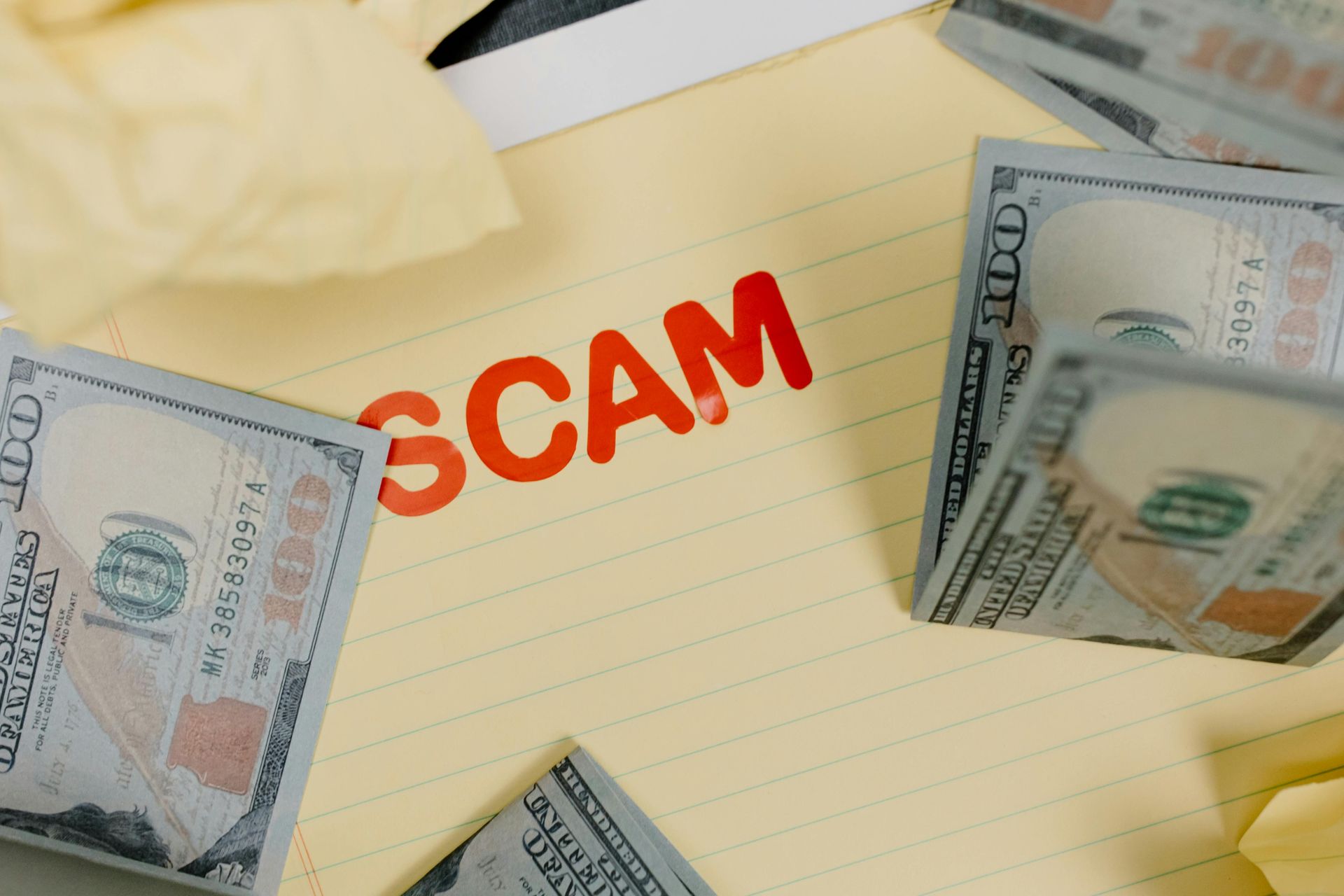
The word scam is written on a piece of paper next to a pile of money.
By Agency Bloc • May 29, 2026
Imagine getting a call in the middle of the night from someone claiming to be your grandchild, panicked and in trouble. They say they’ve been in an accident or arrested—and they desperately need money. Your heart races. You’d do anything to help. That’s exactly what scammers are counting on. The Federal Communications Commission (FCC) has recently issued a warning about a rise in what's known as the “grandparent scam” —a sneaky and heartless scheme targeting older adults with urgent, emotional phone calls meant to trick them into sending money. What Is the Grandparent Scam? These scams usually start with a phone call from someone pretending to be your grandchild (or another close relative). They’ll say they’re in trouble—maybe stuck in jail or in a hospital—and they need money fast for bail, legal fees, or emergency expenses. To make things even more convincing, they may hand the phone off to someone pretending to be a lawyer or a police officer. And they’ll likely ask you not to tell anyone—saying it’s a “private” or “sensitive” situation. That sense of urgency is key to the scam. It’s meant to bypass your instinct to double-check and make you act fast—before you have time to think it through or talk to someone else. Why It Works—and Why It’s Dangerous These calls often come late at night or early in the morning, when you’re more likely to be caught off guard. The scammer might not even say who they are—just “Grandma, it’s me”—and hope you fill in the blank for them. From there, they use that information to sound more convincing. Some victims have been asked to send money via wire transfer, cryptocurrency, gift cards, or even in cash via courier—all methods that are difficult or impossible to trace or reverse. According to the FCC, scammers using this method have stolen tens of millions of dollars from seniors across the U.S. Watch for These Warning Signs If you or someone you love receives a call like this, here are some red flags that it could be a scam: High pressure and urgency – You’re told to act immediately Vague or strange details – They may not identify themselves clearly, or hope you’ll say the grandchild’s name for them Unverifiable location or story – They say they’re in jail overseas or in a place where you can’t easily check on them Unusual payment requests – Gift cards, Bitcoin, wire transfers, or cash deliveries Calls at odd hours – Scammers try to catch you when you’re less alert What To Do If You Get a Suspicious Call If something doesn’t feel right, trust your gut. Here’s what you can do to stay safe: ✅ Hang up and verify – Call your grandchild or their parent using a phone number you know is theirs ✅ Talk to someone you trust – A second opinion from a friend or family member can make all the difference ✅ Don’t rely on caller ID – Scammers often “spoof” numbers to make it look like someone you know is calling ✅ Block the number – Use your phone’s settings to block suspicious calls ✅ Report the scam – Contact the National Elder Fraud Hotline at 833-FRAUD-11 and file a complaint with the FCC What If You’ve Already Sent Money? First of all, don’t panic—and know that you’re not alone. Scammers are incredibly convincing, and even smart, cautious people have been tricked. Here’s what to do: Call your bank or payment service right away – They may be able to stop or reverse the transaction if it's recent Report it – Contact the FCC, your local police, and the FBI’s Internet Crime Complaint Center at ic3.gov Let your family know – They can help protect you and others from future attempts Help Protect Others, Too The more people know about this scam, the harder it becomes for criminals to succeed. Please share this information with friends, neighbors, and especially your older loved ones. A quick conversation now could prevent a heartache later. And remember—if you ever get a call like this and aren’t sure what to do, don’t rush. Take a breath, hang up, and check in with someone you trust. Real family emergencies don’t come with secret demands or payments via gift cards.
Show More